Manipuri shopping isn't the kind of trip to big malls — it's small, slow and handmade. The most rewarding buys come from Ima Keithel, the state emporium, and a few trusted craft clusters around the valley. Most things are made by women, often on looms and in courtyards you can witness yourself.
Handloom shawls & textiles
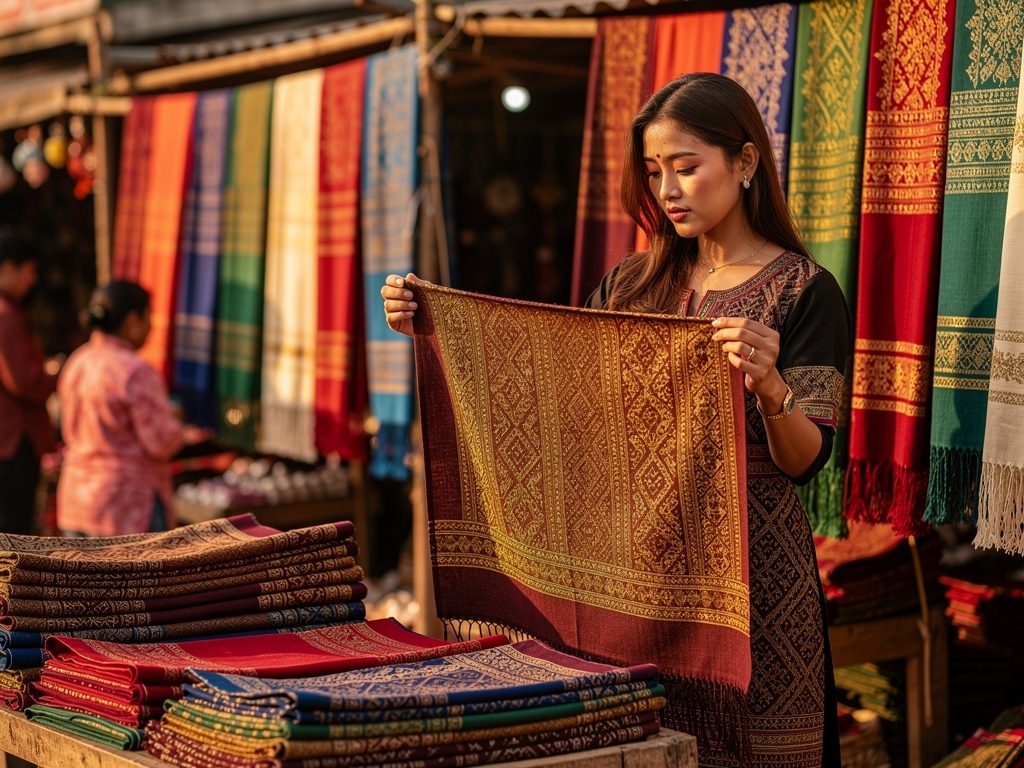
Manipur's handloom is world-renowned, and you'll see it on almost every woman in the valley. There are several distinct weaves — knowing the names helps you buy with confidence:
MachiCotton shawl with embroidered motifs — daily wear, also given as gift
PhanekThe traditional wraparound skirt, handwoven cotton or silk, often with characteristic horizontal stripes
Mayek-phi / Mayek-naibiShawls featuring the ancient Meitei (Mayek) script motifs
Khet-agoCeremonial silk piece with traditional diamond patterns
Chandra-khadiFine silk with very subtle stripe pattern — formal wear
KumilTraditional soft silk blanket — warm, light, makes a great buy
Look for the Handloom Mark tag on certified genuine handloom pieces. Prices vary from ₹500 for a simple cotton Machi to several thousand rupees for a fine silk. Do not bargain the lowest-priced shaws — many weavers earn very little per piece.
Bamboo & cane craft
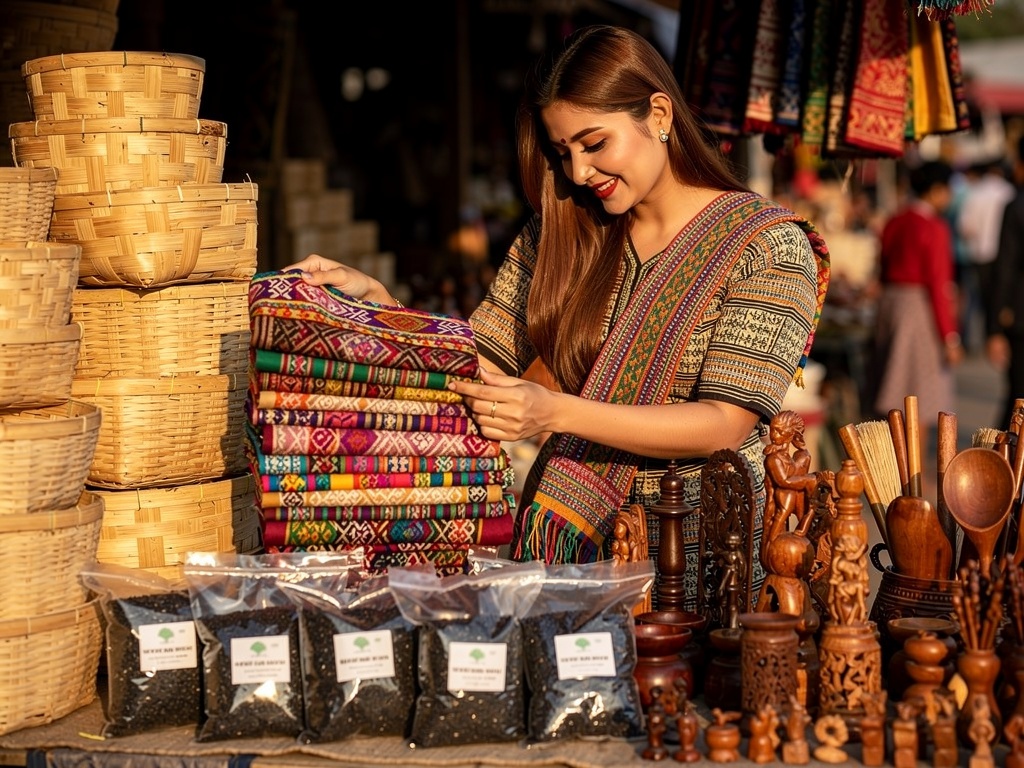
From kitchen spoons and baskets to decor lamps and full chair sets, Manipuri bamboo and cane craft is beautiful, light and practical. Look for:
- Wangkhei/Yairipok bamboo baskets — for kitchen, laundry or gifting
- Cane stools & chairs — surprisingly comfortable
- Bamboo lampshades & lamps — soft, decorative, easy to pack
- Woven mats — good quality, used everywhere in Manipuri homes
The best cluster is around Wangkhei on the eastern edge of Imphal — most workshops will let you browse. Be respectful about photography; some artisans prefer not to be photographed.
Pottery & ceramics
The Kangla Sa pottery tradition dates back centuries. Pieces are unglazed, simple and rustic — small bowls, water goblets (used ceremonially) and village-style kangs (earthen pots). Look for them at craft emporiums and at roadside stalls between Imphal and Sendra.
Black rice & food to take home
Chak-hao (black rice) — Manipur's GI-tagged purple-black rice — is one of the most flavourful souvenirs and easy to ship. Buy from the state emporia or directly from small millers; look for the GI tag for authenticity. See our food guide for cooking notes and where to find it prepared as kheer and bread.
Other easy-to-pack local foods: Ngari (fermented fish — vacuum-seal it!), dried bamboo shoots (soibum), singhara & hawai-jar pickles.
Where to shop
Ima Keithel (Women's Market)
The heart of Manipuri commerce. Run by thousands of women vendors organized along clan lines. Vendors sit on traditional mats with their day's produce — vegetables, fish, handloom, baskets, kitchen tools. Tip: arrive by 9:00 when the cloth and craft lanes are at their best; bring small denominations.
Visit guide →
Manipur State Handloom & Handicrafts Emporium (Sangai Emporium)
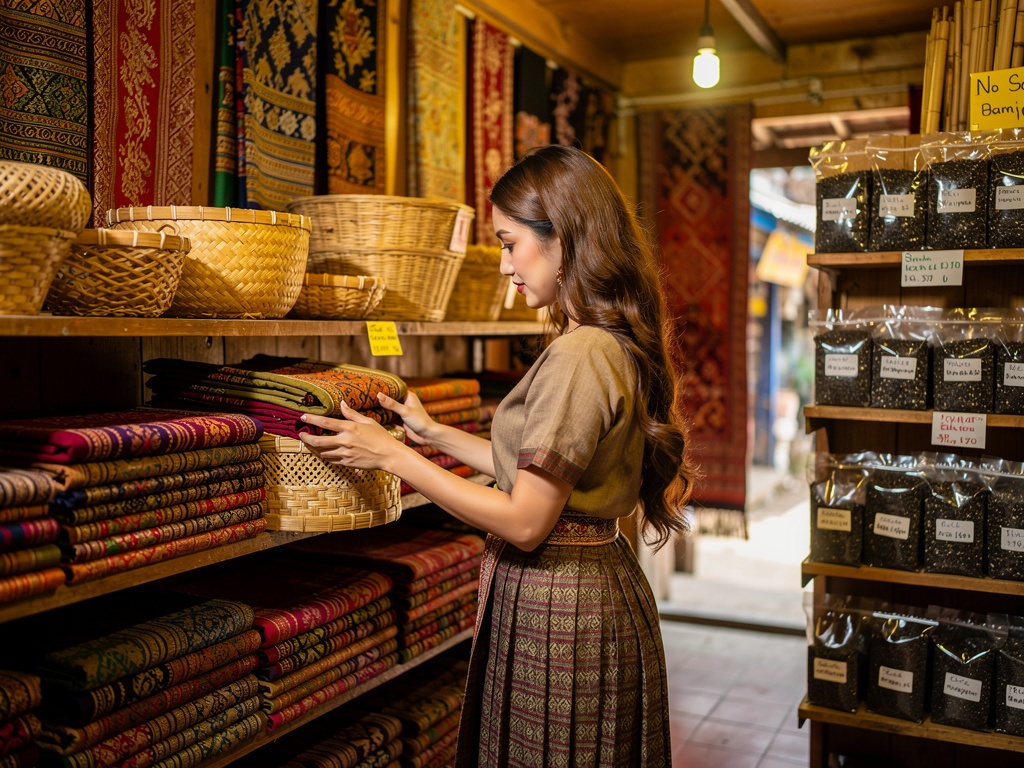
The state-run emporium is the safest place to buy authenticated GI-tag handloom and craft, with fixed prices and clean packaging. Located near the city centre. Good for gifts where you want a guarantee.
Wangkhei & Pangei craft clusters
A short drive east of Imphal. You can watch weavers at work, see cane makers, and buy directly from artisans. Less gloss than the emporia, more genuine.
Sangai Festival craft fair (late November)
If your trip aligns with the festival, the state-wide craft fair at the festival ground is the best place to buy rare weaves and meet weavers from across the hill districts.
⚠ Avoid & be careful
- Be cautious with antique-looking items — genuinely old Manipuri artefacts cannot legally be taken out of India without proper paperwork.
- For wild honey, herbal medicines and unlabelled "cures": don't buy from street vendors without provenance.
- Don't trust anyone who offers to "help you find cheaper deals" off-market — scams around market tips are common in tourist towns.
- Treat every price as the start of a polite negotiation — but pay fairly. Weaving is hard work.
Shipping it home
- Shawls & textiles pack small and dense — carry-on luggage can comfortably hold a fine silk piece.
- Food items: The Imphal post office and India Post parcel counters ship reasonably; ask your hotel to help pack and dispatch. Allow extra time.
- Cane & bamboo: wrap edges well; delicate items survive best as checked luggage in a rigid box.
- Receipts matter — ask for a handloom tag or invoice for any textile you buy; customs queries abroad have put travellers in trouble over unverified "antique" claims.
💰 A note on bargaining
Bargaining politely at Ima Keithel and the craft clusters is normal — vendors expect it. The state emporia have fixed prices. As a rule of thumb, your first offer at 70% of asking, settling at ~85%, is fine. For handloom weavers — particularly elderly women — give a fair price.